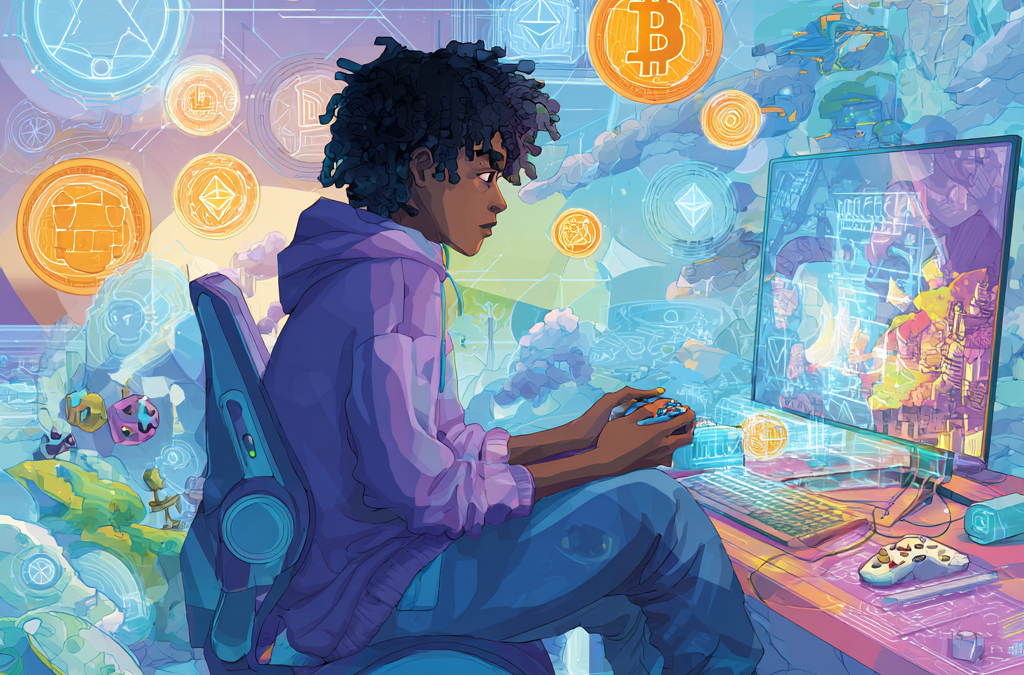
Best Play-to-Earn Crypto Games: How Gamers Are Earning Real Crypto by Playing
Play-to-earn (P2E) gaming is one of the few crypto sectors that has real users, real activity, and real value exchange. Unlike speculative tokens with no product, P2E games reward players with cryptocurrency, NFTs, and tradable digital assets for time, skill, and participation.
As highlighted in recent industry breakdowns (including Eneba’s research), blockchain gaming has matured beyond hype. Today’s top play-to-earn games combine actual gameplay, player ownership, and open economies where rewards can be sold, traded, or reinvested.
This guide expands on the top play-to-earn crypto games, how they work, what you earn, and what to consider before jumping in.
What Are Play-to-Earn (P2E) Crypto Games?
Play-to-earn games use blockchain technology to give players true ownership of in-game assets. Instead of items being locked inside a publisher’s database, they exist as on-chain tokens or NFTs that players control.
Players can earn by:
-
Winning battles or matches
-
Completing quests or missions
-
Crafting or trading NFT items
-
Owning virtual land or characters
-
Participating in in-game economies or DAOs
Rewards are usually paid in:
-
Native game tokens
-
NFTs with marketplace value
-
Governance or staking tokens
Top Play-to-Earn Crypto Games You Should Know
Axie Infinity
Blockchain: Ronin (Ethereum sidechain)
Earn: AXS, SLP, Axie NFTs
Axie Infinity pioneered modern P2E gaming. Players battle, breed, and trade Axie creatures while earning tokens and NFTs. While earnings have stabilized since the early boom, Axie remains one of the most developed blockchain game ecosystems.
Best for: Competitive players and collectors who want a proven P2E model.
The Sandbox
Blockchain: Ethereum
Earn: SAND, LAND NFTs, asset NFTs
The Sandbox is a metaverse platform where players can buy land, create experiences, host events, and monetize user-generated content. Earnings come from asset creation, land ownership, and community engagement.
Best for: Builders, creators, and metaverse entrepreneurs.
Illuvium
Blockchain: Ethereum / Immutable X
Earn: ILV, sILV, Illuvial NFTs
Illuvium is considered one of the most visually advanced blockchain games. Players explore open worlds, capture creatures, and battle strategically. Rewards are tied to gameplay skill and asset ownership.
Best for: RPG players seeking AAA-quality visuals and deeper mechanics.
Gods Unchained
Blockchain: Ethereum / Immutable X
Earn: GODS tokens, NFT cards
Gods Unchained is a free-to-play trading card game where skill matters. Players earn tokens and mint NFTs by winning matches and participating in ranked play.
Best for: Card-game fans who want P2E without large upfront costs.
Big Time
Blockchain: Ethereum (Layer-2)
Earn: BIGTIME tokens, cosmetic NFTs
Big Time focuses on action-RPG gameplay with co-op dungeons. Players earn tokens via time-based mechanics and cosmetic NFTs rather than pay-to-win advantages.
Best for: Action gamers who value skill over speculation.
Pixels
Blockchain: Ethereum / Ronin
Earn: PIXEL tokens, land NFTs
Pixels blends farming simulation with social gameplay. Players earn tokens through farming, crafting, and owning land.
Best for: Casual players who enjoy low-stress, social gameplay.
Alien Worlds
Blockchain: WAX / BNB Chain
Earn: TLM tokens
Alien Worlds centers around resource mining and DAO governance. Players mine planets, stake tokens, and participate in planetary decision-making.
Best for: Passive players interested in governance and staking mechanics.
Decentraland
Blockchain: Ethereum
Earn: MANA, LAND NFTs, wearables
Decentraland is a long-running virtual world where players earn by building, hosting events, selling digital wearables, and monetizing land.
Best for: Virtual real estate investors and digital creators.
Star Atlas
Blockchain: Solana
Earn: ATLAS, POLIS tokens, ship NFTs
Star Atlas aims to deliver a massive space MMO with high-end visuals. While still developing, its economy includes ships, territory control, and governance.
Best for: Long-term believers in large-scale blockchain gaming.
CryptoBlades
Blockchain: BNB Chain
Earn: SKILL tokens, weapon NFTs
CryptoBlades allows players to earn through combat and crafting. While simpler than newer titles, it remains an accessible P2E option.
Best for: Players seeking lightweight, straightforward earning loops.
How Play-to-Earn Games Actually Pay You
Most P2E games reward players through:
-
Gameplay rewards: Tokens earned by completing objectives
-
NFT sales: Selling characters, land, or items on marketplaces
-
Staking & governance: Passive income through locked tokens
-
Player-driven markets: Supply and demand set prices, not developers
The strongest P2E games balance fun gameplay with sustainable economies.
Risks & Realities of Play-to-Earn Gaming
Before diving in, understand the trade-offs:
-
Token prices fluctuate with market conditions
-
Some games require upfront NFT purchases
-
Not all game economies are sustainable long-term
-
Earnings depend on time, skill, and market demand
P2E should be viewed as high-risk, skill-based participation, not guaranteed income.
Why Play-to-Earn Still Matters in Crypto
While many crypto sectors struggle with adoption, gaming already has users. Play-to-earn works because:
-
Players already understand digital items
-
Ownership feels intuitive
-
Rewards align with engagement, not hype
As crypto matures, P2E games with real gameplay, real economies, and real users may outperform speculative narratives.
Final Thoughts
Play-to-earn gaming isn’t about getting rich overnight anymore. It’s about:
-
Ownership
-
Participation
-
Skill-based rewards
-
Digital economies that actually function
For gamers, creators, and crypto-curious users, P2E represents one of the most practical uses of blockchain today.